

In recent years, cryptocurrency has become a crucial element of the global financial system. As we look ahead to 2024, the cryptocurrency market is set to experience both volatility and opportunity. With the emergence of central bank digital currencies (CBDCs) and the rapid growth of decentralized finance (DeFi), we are in the midst of an extraordinary financial revolution.
Join Coinreviews as we delve into the key trends and predictions that will define the future of cryptocurrency in 2024
What is Cryptocurrency?
Cryptocurrency is a digital payment network that operates without the need for banks to verify transactions. It’s a peer-to-peer system that allows anyone, anywhere, to send and receive payments. Unlike physical money exchanged in the real world, cryptocurrency transactions exist solely as digital records in an online database that tracks specific exchanges. When you transfer cryptocurrency, these transactions are logged on a public ledger. Cryptocurrency is securely stored in digital wallets.
The name “cryptocurrency” comes from the use of encryption to secure and verify transactions. Advanced coding ensures the safe storage and transmission of cryptocurrency data between wallets and public ledgers. The purpose of encryption is to maintain security and trust.
Bitcoin, created in 2009, was the first cryptocurrency and remains the most recognized today. Many people are drawn to cryptocurrency for trading purposes, with speculators often driving prices to dramatic highs.

How is Cryptocurrency understood?
Why are Cryptocurrencies The Future of Money?
Cryptocurrency represents the first true alternative to traditional banking, offering significant advantages over other payment systems and asset classes. Think of it as money 2.0 — a new form of cash designed for the digital world, making it the fastest, easiest, cheapest, safest, and most universally accessible way to exchange value globally.
Cryptocurrency can be used to purchase goods and services or serve as part of an investment strategy. However, unlike traditional currencies, it cannot be controlled or manipulated by any central authority, because there is no central governing body. Regardless of political changes or economic instability, your cryptocurrency remains secure.
Digital currencies offer equal financial opportunities to anyone with internet access, providing the same access to cryptocurrency whether you’re in a developed country or a remote area. All that’s required is a smartphone or device with an internet connection.
Cryptocurrency also plays a crucial role in expanding economic freedom globally. Its borderless nature allows for free trade, even in regions where governments tightly regulate citizens’ finances. In countries suffering from high inflation, cryptocurrency can serve as a more stable alternative to failing fiat currencies for savings and transactions.
When incorporated into an investment strategy, cryptocurrency can be approached in various ways. You can buy and hold coins like Bitcoin, which was nearly worthless in 2008 but has since grown to be worth thousands of dollars per coin. Alternatively, you can adopt a more active strategy, buying and selling cryptocurrencies that show significant price fluctuations.
For investors seeking stability within the cryptocurrency market, USD Coin (USDC) is an excellent option. It is pegged to the value of the U.S. dollar, offering the speed and affordability of cryptocurrency transactions while maintaining the stability of a traditional currency. Coinbase users who hold USDC also earn rewards, making it a compelling alternative to conventional savings accounts.

In the 4.0 era, Cryptocurrency is the current trend.
Understanding Cryptocurrency
Cryptocurrency refers to digital or virtual currencies that rely on cryptographic systems. These currencies enable secure online transactions without the need for third-party intermediaries. The term “crypto” comes from the encryption algorithms and techniques used to protect these transactions, including elliptical curve encryption, public-private key pairs, and hashing functions.
At the core of Bitcoin and other cryptocurrencies is blockchain technology, which plays a crucial role in their appeal and functionality. A blockchain is essentially a chain of connected blocks of data recorded on an online ledger. Each block contains a series of transactions that are independently verified by validators within the network. Before any new block is added, it must go through a verification process, which makes it nearly impossible to alter or falsify transaction histories. This online ledger is maintained and agreed upon by a network of individual nodes, or computers.
Experts suggest that blockchain technology, which powers cryptocurrency, has potential uses across multiple industries, supply chains, and processes like online voting and crowdfunding. Financial institutions such as JPMorgan Chase & Co. (JPM) are already utilizing blockchain to reduce transaction costs by streamlining payment processing systems.
Types of Cryptocurrency
Many cryptocurrencies are created to support the specific functions of the blockchain they are built on. For instance, Ethereum’s ether (ETH) was designed as payment for validating transactions and adding new blocks. When Ethereum transitioned to a proof-of-stake model in September 2022, ether also took on the role of the blockchain’s staking mechanism. Similarly, XRP, used on the XRP Ledger, is intended to facilitate cross-border transfers for financial institutions.
With so many cryptocurrencies available, it’s important to understand their different types. Knowing the purpose of a cryptocurrency can help determine whether it’s a wise investment—cryptocurrencies with clear use cases tend to carry less risk than those without a defined purpose.

What types of cryptocurrencies are there?
Often, when people discuss cryptocurrency, they mention the coin’s name. However, the name doesn’t necessarily describe the type of coin. Here are some common types of cryptocurrencies along with examples of tokens in each category:
- Utility tokens: XRP and ETH are examples of utility tokens, which serve specific functions on their respective blockchains.
- Transactional tokens: Designed as a means of payment, with Bitcoin being the most well-known.
- Governance tokens: These tokens grant voting or decision-making rights on a blockchain, like Uniswap.
- Platform tokens: Support applications built on a blockchain, such as Solana.
- Security tokens: Represent ownership of an asset, such as tokenized stocks. MS Token, for instance, allows partial ownership of the Millennium Sapphire.
If you come across a cryptocurrency that doesn’t fit into one of these categories, you’ve either found a new type or something that warrants further investigation to verify its legitimacy.
Popular Cryptocurrencies
As the cryptocurrency market continues to grow, several key players have emerged, each with its own unique features and use cases. Below is an overview of some of the most popular cryptocurrencies, as well as the importance of diversification in cryptocurrency portfolios.
Bitcoin (BTC)
Bitcoin, launched in 2009, is the original cryptocurrency and remains the most well-known and valuable. Created by an anonymous person or group known as Satoshi Nakamoto, Bitcoin introduced the concept of a decentralized, peer-to-peer digital currency that doesn’t rely on central authorities like banks. Bitcoin is widely used as a store of value and is often referred to as “digital gold.” Its primary use case is facilitating secure and transparent transactions without intermediaries. Despite its volatility, Bitcoin has gained popularity as both a long-term investment and a hedge against inflation.

Bitcoin (BTC) is the most trusted cryptocurrency
Ethereum (ETH) and Smart Contracts
Ethereum, introduced in 2015, revolutionized the cryptocurrency space by introducing smart contracts—self-executing contracts with the terms of the agreement directly written into code. While Ethereum’s native currency, ether (ETH), functions as a payment system for transactions on its blockchain, its true value lies in its platform’s ability to support decentralized applications (dApps). Ethereum’s blockchain has been instrumental in the growth of decentralized finance (DeFi) and non-fungible tokens (NFTs), offering a versatile and programmable layer for developers. With its transition to a proof-of-stake consensus mechanism, Ethereum aims to improve scalability and reduce energy consumption.
Other Notable Altcoins
Several other altcoins have gained prominence due to their unique use cases and technological innovations:
Ripple (XRP): Ripple is designed to facilitate fast and cost-effective international money transfers, particularly for financial institutions. XRP, its native currency, acts as a bridge currency for cross-border transactions, significantly reducing transfer times and fees compared to traditional methods.
Litecoin (LTC): Often referred to as the “silver to Bitcoin’s gold,” Litecoin was created in 2011 by Charlie Lee. It was designed to offer faster transaction times and lower fees than Bitcoin, making it more suitable for everyday transactions. While its use case is similar to Bitcoin, its improvements in speed and cost make it a popular choice for smaller payments.
Cardano (ADA): Launched in 2017, Cardano is a blockchain platform focused on sustainability and scalability. It aims to offer secure and scalable solutions for decentralized applications, much like Ethereum, but with a greater emphasis on scientific research and peer-reviewed development. ADA, its native token, is used for transactions and staking on the network.

Cardano (ADA) – The First Blockchain Based on Academia
Differences in Use Cases and Technology
Each cryptocurrency serves a different purpose, which sets them apart in terms of use cases and technological infrastructure. For example, Bitcoin is primarily used as a store of value, while Ethereum supports smart contracts and decentralized applications. XRP focuses on cross-border payments, Litecoin on faster transactions, and Cardano on providing a scalable platform for developers. Understanding these differences is crucial for investors looking to build a balanced portfolio.
Importance of Diversification in Cryptocurrency Portfolios
Just like in traditional investing, diversification is key to managing risk in cryptocurrency portfolios. Each cryptocurrency has its own strengths and vulnerabilities, so spreading investments across multiple coins can help mitigate risks associated with price volatility, technological setbacks, or regulatory changes. By diversifying, investors can better position themselves to capitalize on the growth of different sectors within the cryptocurrency market while minimizing potential losses.
In conclusion, understanding the differences between popular cryptocurrencies and diversifying investments can help investors navigate the ever-changing cryptocurrency landscape.
The Benefits of Cryptocurrency in 2024
Cryptocurrency offers a range of advantages over traditional financial systems, making it an increasingly popular alternative for individuals and businesses. From enhanced security and privacy to lower transaction fees and greater accessibility, cryptocurrency has the potential to transform the way we manage and exchange money. Below are some of the key benefits.
Security and Privacy
Cryptocurrency is considered more secure than traditional payment methods due to its use of advanced cryptographic techniques. Transactions are verified by a decentralized network of computers (nodes) through blockchain technology, making it extremely difficult for hackers to alter or forge transaction data. Unlike banks, which store all financial information in centralized databases, cryptocurrency transactions are decentralized and encrypted, reducing the risk of data breaches.
Privacy is another key benefit of cryptocurrency. Users can make transactions without providing personal information, as cryptocurrencies don’t require users to link their identities to their wallets. While transactions are publicly visible on the blockchain, the identity of the wallet owners remains anonymous unless voluntarily disclosed. This offers a significant advantage over traditional systems where personal data is required for transactions.

Should we be concerned about security and privacy in cryptocurrency trading?
Lower Transaction Fees
Traditional financial institutions often charge high fees for processing payments, especially for international transactions. These fees can include conversion rates, wire transfer costs, and intermediary fees, all of which add up. In contrast, cryptocurrencies eliminate intermediaries, allowing users to transfer funds directly to one another. The peer-to-peer nature of cryptocurrency transactions significantly reduces transaction costs, making it a cost-effective solution for both individuals and businesses.
Cryptocurrency is particularly beneficial for international transfers, where traditional banking fees and exchange rates can be prohibitively expensive. By bypassing these fees, cryptocurrency allows for cheaper global transactions, enabling businesses to operate more efficiently and individuals to send money across borders with minimal costs.
Faster Transactions
Another major benefit of cryptocurrency is its speed. Traditional banking systems, especially when dealing with international transfers, can take several days to process payments. This delay is often due to the involvement of multiple financial institutions, regulatory procedures, and currency conversions. Cryptocurrency, however, enables near-instantaneous transactions, as blockchain technology verifies and records transactions quickly, regardless of geographical location.
This makes cryptocurrency an ideal solution for individuals and businesses that require fast and efficient cross-border payments. Whether sending money to family abroad or settling an international business invoice, cryptocurrency ensures that funds are transferred in a matter of minutes, not days.
Accessibility and Financial Inclusion
One of the most transformative aspects of cryptocurrency is its potential to increase financial inclusion. In many parts of the world, people lack access to traditional banking services, either because of geographical barriers, lack of identification, or insufficient financial infrastructure. However, with cryptocurrency, all that is required to participate in the global economy is a smartphone and an internet connection.
This means that cryptocurrency can “bank the unbanked,” providing financial services to individuals who have been excluded from the traditional financial system. Cryptocurrency enables secure, low-cost transactions, empowering people in developing countries and underserved communities to engage in commerce, save money, and make international payments without the need for a traditional bank account.

How Cryptocurrencies Will Deepen Financial Inclusion?
Transparency and Immutable Ledgers
Cryptocurrency transactions are recorded on a blockchain, which is a transparent and immutable ledger. Once a transaction is added to the blockchain, it cannot be changed or deleted, providing a permanent and secure record of all transactions. This level of transparency reduces the risk of fraud and builds trust, as anyone can verify the authenticity of transactions on the blockchain.
The decentralized nature of blockchain technology also ensures that no single entity has control over the ledger, making it resistant to manipulation. This immutable record-keeping system is particularly valuable for industries that require transparency and accountability, such as supply chain management, voting systems, and financial auditing.
Examples for Cryptocurrency
There are thousands of cryptocurrencies available today, with some of the most well-known being:
Bitcoin (BTC)
Launched in 2009, Bitcoin was the first-ever cryptocurrency and remains the most widely traded digital asset. It was created by an individual or group known as Satoshi Nakamoto, whose true identity remains a mystery. Bitcoin set the stage for the cryptocurrency revolution and continues to be the market leader.
Ethereum (ETH)
Created in 2015, Ethereum is a blockchain platform that features its own cryptocurrency known as Ether (ETH). Ethereum is the second most widely used cryptocurrency after Bitcoin and is particularly known for enabling smart contracts and decentralized applications (dApps) to be built on its blockchain.
Litecoin (LTC)
Litecoin, which closely resembles Bitcoin, was designed for faster transactions and the ability to process a higher volume of payments. Since its creation, Litecoin has introduced innovations such as quicker block generation times, making it a more efficient cryptocurrency for transactions.
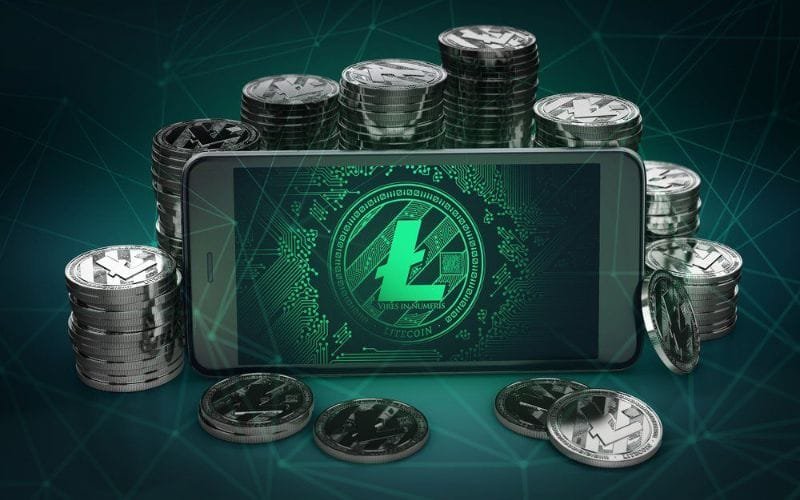
Litecoin (LTC) closely resembles Bitcoin
Ripple (XRP)
Founded in 2012, Ripple is a digital payment protocol and cryptocurrency designed to facilitate fast and secure cross-border payments. Unlike most cryptocurrencies, Ripple is designed not only for individual use but also for financial institutions and banks to track various types of transactions, including those beyond cryptocurrencies.
Cryptocurrencies other than Bitcoin are commonly referred to as “altcoins,” highlighting their distinction from the original cryptocurrency.
How to Buy Cryptocurrency in 2024?
If you’re wondering how to purchase cryptocurrency safely, the process generally involves three key steps:
Step 1: Choosing a Platform
The first decision is selecting the platform you’ll use to buy cryptocurrency. There are two main types to consider:
Traditional brokers: These are online brokerage platforms that allow users to trade not only cryptocurrency but also other financial assets like stocks, bonds, and ETFs. They often offer lower trading costs but might have fewer cryptocurrency-related features.
Cryptocurrency exchanges: Dedicated exchanges focus specifically on crypto trading, providing access to a wide range of digital currencies, wallet storage options, interest-bearing accounts, and more. Keep in mind that many exchanges charge asset-based fees.

How to choose a good cryptocurrency platform?
When choosing a platform, you should evaluate the range of cryptocurrencies available, the fees involved, security features, as well as storage and withdrawal options. It’s also a good idea to check whether the platform offers educational resources for beginners.
Step 2: Funding Your Account
Once you’ve selected a platform, the next step is to fund your account. Most cryptocurrency exchanges allow you to buy digital currencies using fiat money (government-issued currencies such as USD, GBP, or EUR) via debit or credit cards. However, this can vary depending on the platform.
Be cautious when using credit cards, as cryptocurrency transactions are often seen as risky, and some exchanges do not accept them. Additionally, some credit card companies prohibit crypto purchases due to the volatility of digital currencies, which can lead to high debts or transaction fees.
Many platforms also accept ACH transfers or wire transfers. The accepted payment methods and processing times for deposits and withdrawals differ between platforms. When funding your account, make sure to research any potential fees, including deposit, withdrawal, and trading fees, as these vary depending on the platform and payment method.
Step 3: Placing an Order
After funding your account, you can place an order through the exchange’s or broker’s web or mobile platform. To buy cryptocurrency, select the “buy” option, choose the type of order, enter the amount of cryptocurrency you’d like to purchase, and confirm the order. The process is similar for “sell” orders.
Alternatively, some payment services such as PayPal, Cash App, and Venmo allow users to buy, sell, or hold cryptocurrency, offering more straightforward options for getting involved in crypto.
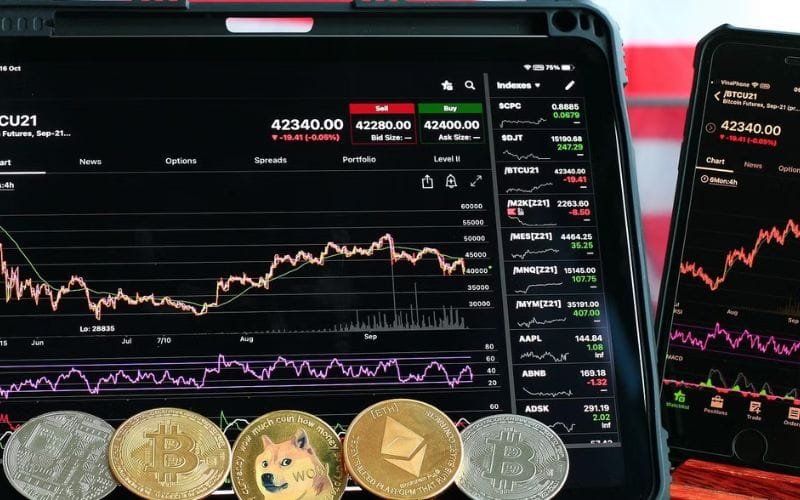
Choose and Order the Cryptocurrency you see potential in
There are also other ways to invest in cryptocurrency, including:
- Bitcoin trusts: These allow you to purchase shares through a regular brokerage account, providing exposure to cryptocurrency without directly owning it.
- Bitcoin mutual funds and ETFs: These offer indirect exposure to Bitcoin through traditional investment vehicles.
- Blockchain stocks or ETFs: You can invest in companies that develop blockchain technology or use it in their operations, providing another way to benefit from cryptocurrency growth.
Ultimately, the best approach depends on your investment goals and risk tolerance.
How to Store Cryptocurrency?
After purchasing cryptocurrency, securing it safely is crucial to protect your digital assets from potential hacks or theft. Cryptocurrencies are generally stored in crypto wallets, which are either physical devices or online software designed to safeguard your private keys — the codes needed to access your cryptocurrencies. While some cryptocurrency exchanges offer wallet services, making it convenient to store your assets directly on the platform, not all brokers or exchanges provide this feature automatically.
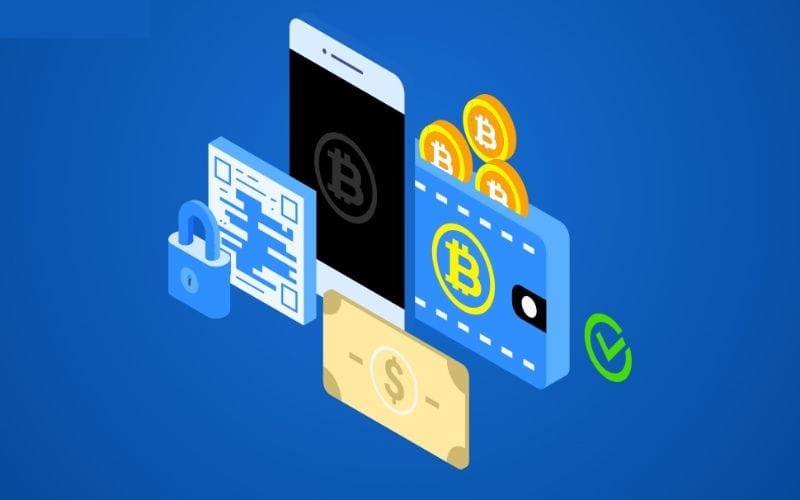
How to store cryptocurrency properly?
There are two primary types of cryptocurrency wallets to choose from: hot wallets and cold wallets.
Hot Wallet Storage: Hot wallets refer to storage solutions that use online software to manage and protect your private keys. Since they are connected to the internet, they provide quick access to your cryptocurrency but may be more vulnerable to online attacks.
Cold Wallet Storage: Cold wallets, also known as hardware wallets, are physical devices that store your private keys offline, providing a higher level of security compared to hot wallets. By being disconnected from the internet, cold wallets are much less susceptible to hacking attempts, although they usually come with associated fees.
For optimal security, many users prefer to use cold wallets for long-term storage and hot wallets for smaller, frequent transactions. The choice between hot and cold storage depends on your personal security needs and how often you plan to access your cryptocurrency.
What Can You Buy with Cryptocurrency?
Can you buy houses, cars, clothes, etc. with cryptocurrency?
When Bitcoin was initially introduced, it was envisioned as a medium for everyday transactions, enabling users to buy items as simple as a cup of coffee to large purchases like real estate. However, this vision hasn’t fully come to pass. While the number of businesses accepting cryptocurrency is steadily increasing, using it for large transactions is still relatively uncommon. Despite this, cryptocurrencies can be used to purchase a wide range of products on various e-commerce platforms. Here are a few examples:
- Technology and E-commerce Sites: Several tech companies accept cryptocurrency for purchases. Retailers like Newegg, AT&T, and Microsoft allow customers to use crypto to buy tech products. Overstock was one of the first e-commerce platforms to accept Bitcoin, and others like Shopify, Rakuten, and Home Depot have followed suit.
- Luxury Goods: Some high-end retailers accept cryptocurrency as a payment method. For instance, Bitdials, an online luxury retailer, offers high-end watches such as Rolex and Patek Philippe in exchange for Bitcoin.
- Cars: Cryptocurrency is now an accepted payment method at several car dealerships, ranging from mainstream brands to luxury vehicle dealers.
- Insurance: In 2021, Swiss insurer AXA began accepting Bitcoin for premium payments across its various insurance lines (except life insurance, due to regulatory issues). In the US, Premier Shield Insurance also accepts Bitcoin for home and auto insurance payments.
If a retailer doesn’t accept cryptocurrency directly, you can still make purchases using a cryptocurrency debit card, such as BitPay in the US, to convert your crypto into traditional currency for payments.
Cryptocurrency Fraud and Scams
Unfortunately, as the popularity of cryptocurrency grows, so does the number of related crimes. Common cryptocurrency scams include:
Fake Websites: These fraudulent sites often look legitimate, using fake testimonials and complex cryptocurrency jargon to lure investors. They promise high, guaranteed returns, but only if you continue investing more money.
Virtual Ponzi Schemes: Scammers advertise fake investment opportunities in digital currencies, using funds from new investors to pay earlier investors, creating the illusion of large profits. One infamous scheme, BitClub Network, scammed over $700 million before the culprits were indicted in December 2019.
“Celebrity” Endorsements: Fraudsters impersonate famous figures or billionaires, claiming they can multiply your investment in cryptocurrency. These scams often involve messaging apps or social media, where scammers spread rumors that a well-known individual is backing a specific cryptocurrency. This increases the price temporarily, allowing scammers to sell off their holdings before the price crashes.
Romance Scams: According to the FBI, there has been a surge in romance scams where con artists use dating apps or social media to convince individuals to invest in or trade cryptocurrency. In the first seven months of 2021, the FBI’s Internet Crime Complaint Center received more than 1,800 reports of crypto-focused romance scams, with total losses exceeding $133 million.
Other types of cryptocurrency fraud involve criminals posing as legitimate traders, setting up fake exchanges, or offering bogus investment opportunities like cryptocurrency retirement accounts. Hacking is another common issue, where scammers steal funds directly by hacking into digital wallets.
Staying informed and vigilant is key to protecting yourself from cryptocurrency fraud.
Is Cryptocurrency Safe?
Cryptocurrencies are primarily built on blockchain technology, which records transactions in “blocks” that are timestamped. While this process is technically intricate, it results in a digital ledger of cryptocurrency transactions that is difficult for hackers to manipulate.
Additionally, transactions typically require a two-factor authentication process. For example, to initiate a transaction, you might first enter your username and password, followed by an authentication code sent to your personal cell phone.
Despite these security measures, it’s important to note that cryptocurrencies are not immune to hacking. There have been several significant hacks that have cost cryptocurrency startups dearly. For instance, in 2018, hackers breached Coincheck, resulting in losses of $534 million, and BitGrail faced a $195 million theft, marking some of the largest hacks in the cryptocurrency space.
Moreover, unlike government-backed currencies, the value of cryptocurrencies is determined solely by supply and demand, which can lead to extreme price fluctuations that may yield substantial profits or substantial losses for investors. Additionally, cryptocurrency investments enjoy far less regulatory protection compared to traditional financial products like stocks, bonds, and mutual funds.
Four Tips to Invest in Cryptocurrency Safely
Investing always involves risk, and many experts regard cryptocurrency as one of the more hazardous investment options available. If you’re considering diving into the world of cryptocurrencies, these tips can guide you in making informed decisions.
Research Exchanges
Before making any investments, familiarize yourself with cryptocurrency exchanges. There are estimated to be over 500 exchanges available. Conduct thorough research, read user reviews, and consult with seasoned investors to ensure you choose a reliable platform.
Understand How to Store Your Digital Currency
Once you purchase cryptocurrency, you need a secure way to store it. You can keep your assets on an exchange or in a digital wallet. Various wallet types offer different benefits, technical specifications, and security features. As with exchanges, it’s crucial to explore your storage options before committing to an investment.
Diversify Your Investments
Diversification is essential in any solid investment strategy, and this principle applies to cryptocurrency as well. Avoid putting all your funds into Bitcoin simply because it’s the most recognized name. With thousands of cryptocurrencies available, it’s wiser to distribute your investment across multiple assets.
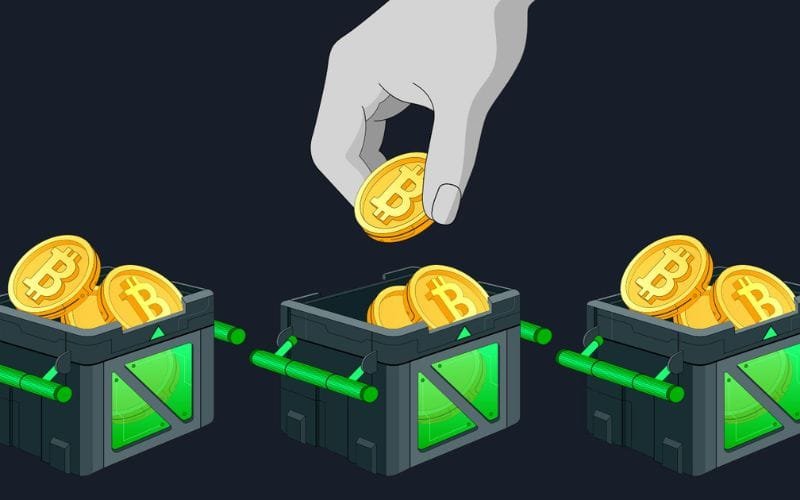
Always diversify your crypto investments
Prepare for Volatility
The cryptocurrency market is known for its extreme volatility, so be ready for significant fluctuations. Price swings can be dramatic. If you find that such volatility could impact your investment portfolio or mental well-being, cryptocurrency might not be the right investment choice for you.
Cryptocurrency is gaining immense popularity, but keep in mind that it is still relatively new and highly speculative. Engaging in this market comes with its own set of challenges, so approach it with caution. If you decide to invest, conduct thorough research and start with a conservative investment strategy.
To enhance your online safety, consider using a comprehensive antivirus program. For example, Kaspersky Internet Security offers protection against malware, spyware, and data theft while ensuring secure online payments through bank-grade encryption.
Is Cryptocurrency Legal?
Fiat currencies derive their authority from government or monetary authorities. For instance, the U.S. dollar is officially recognized and issued by the government as the currency of the United States, making it “legal tender.”
In contrast, cryptocurrencies are not issued by any governmental or private entities, leading to challenges in determining their legal status across various financial jurisdictions globally. Their operation outside most traditional financial infrastructures complicates the situation further.
In the U.S
The legal standing of cryptocurrencies has significant implications for their use in daily transactions and trading activities. In June 2019, the Financial Action Task Force (FATF) suggested that cryptocurrency wire transfers should adhere to its Travel Rule, which mandates compliance with Anti-Money Laundering (AML) regulations.
Importantly, while cryptocurrencies are viewed as a form of money, the Internal Revenue Service (IRS) categorizes them as financial assets or property for tax purposes. Similar to other investments, any capital gains from selling or trading cryptocurrencies are subject to taxation. How the IRS taxes these digital assets—whether as capital gains or ordinary income—depends on how long the taxpayer held the cryptocurrency and how it was used.
In July 2023, U.S. courts ruled that cryptocurrencies are classified as securities when acquired by institutional buyers, but not for retail investors who purchase them on exchanges. Although enthusiasts viewed this as a victory for the crypto industry, it is worth noting that cryptocurrency exchanges and coin offerings to institutional investors remain under the jurisdiction of the SEC. Thus, while cryptocurrency is legal in the U.S., regulatory agencies are progressively tightening their oversight in the sector.
In Asia
Japan’s Payment Services Act recognizes Bitcoin as legal property, requiring cryptocurrency exchanges in the country to gather customer information and details regarding wire transfers. Conversely, China has imposed a ban on cryptocurrency exchanges, transactions, and mining activities, although it has developed a Central Bank Digital Currency (CBDC).
India has been reported to be developing a regulatory framework for cryptocurrencies; however, until such legislation is enacted, cryptocurrency is not illegal, and exchanges can freely offer crypto services.
In Europe
Cryptocurrencies are legal within the European Union. Derivatives and other financial products that incorporate cryptocurrencies must be classified as “financial instruments.” As of June 2023, the European Commission’s Markets in Crypto-Assets (MiCA) regulation became effective, establishing safeguards and guidelines for companies or vendors providing financial services related to cryptocurrencies.
Advantages and Disadvantages of Cryptocurrency in 2024
| Advantages | Disadvantages |
| Removes single points of failure
| Transactions are pseudonymous
|
| Easier to transfer funds between parties
| Pseudonymity allows for criminal uses
|
| Removes third parties
| Have become highly centralized
|
| Can be used to generate returns
| Expensive to participate in a network and earn
|
| Remittances are streamlined
| Off-chain security issues
|
| Prices are very volatile |
Advantages of Cryptocurrency
What are the Advantages & Disadvantages of Cryptocurrency?
Cryptocurrencies introduce a new, decentralized framework for money that eliminates the need for centralized intermediaries like banks and monetary institutions to establish trust and manage transactions between parties. This decentralized system reduces the risk of a single point of failure—unlike traditional financial systems, which can lead to global crises, such as the 2008 financial meltdown caused by the collapse of major investment banks in the U.S.
One of the key benefits of cryptocurrencies is the ability to facilitate direct fund transfers between two parties without relying on trusted third parties like banks or credit card companies. These decentralized transactions are secured through public and private keys, along with various incentive mechanisms, such as proof of work or proof of stake.
Because cryptocurrencies bypass intermediaries, transfers between two parties can occur much faster than conventional money transfers. A notable example of this is flash loans in decentralized finance (DeFi), which can be executed within seconds without requiring collateral and are primarily utilized for trading.
The remittance economy is a prominent application of cryptocurrency. For instance, Bitcoin and other cryptocurrencies serve as intermediary currencies to simplify cross-border money transfers. In this process, a fiat currency is converted to Bitcoin (or another cryptocurrency), transferred internationally, and then converted back to the destination’s fiat currency without any third-party involvement.
Disadvantages of Cryptocurrency
While cryptocurrencies are often claimed to provide anonymity, they are actually pseudonymous. This means they leave a digital footprint that agencies like the Federal Bureau of Investigation (FBI) can track, allowing governments and authorities to monitor financial transactions.
Unfortunately, cryptocurrencies have also gained popularity among criminals for illicit activities, such as money laundering and illegal purchases. A well-known example is Dread Pirate Roberts, who operated a dark web marketplace for drug sales. Additionally, hackers frequently exploit cryptocurrencies for ransomware attacks.
Despite the theoretical decentralization of cryptocurrencies, ownership is becoming increasingly concentrated. Companies are acquiring and holding cryptocurrencies for price appreciation, while investment fund managers are also purchasing them for their portfolios.
A common belief is that anyone can mine cryptocurrencies using just a computer and an Internet connection. However, mining popular cryptocurrencies requires substantial energy, often consuming as much power as entire countries. This high energy demand and the unpredictable nature of mining have led to a concentration of mining activities among large firms, whose revenues can reach billions of dollars.
Although cryptocurrency blockchains offer high levels of security, off-chain repositories related to cryptocurrencies, such as exchanges and wallets, can be vulnerable to hacking. Over the years, numerous cryptocurrency exchanges and wallets have fallen victim to cyberattacks, leading to the loss of millions of dollars worth of coins.
Additionally, cryptocurrencies traded on public markets are subject to significant price volatility, necessitating careful monitoring of price fluctuations. For instance, Bitcoin saw its value soar to nearly $65,000 in November 2021, only to plummet to just above $20,000 a year and a half later. By mid-2024, Bitcoin prices had made a remarkable recovery. Due to this extreme volatility, many investors regard cryptocurrencies as a speculative bubble.
Cryptocurrency – Frequently Asked Questions

FAQs for Cryptocurrency
What Are Public and Private Keys?
A fundamental aspect of cryptocurrency is understanding the essential components that enable its functionality. At the heart of Bitcoin and many other cryptocurrencies is public-key cryptography, which utilizes two types of keys: public keys and private keys. These keys work in pairs to facilitate crypto transactions. Public keys act as identifiers that can be shared openly, while private keys are used for authentication and encryption, remaining confidential to maintain security.
Is Cryptocurrency Actually a Good Investment?
Cryptocurrency can be a suitable investment for those who enjoy speculation and can financially absorb the risk of losing their entire investment. However, it is not advisable for individuals looking to grow their retirement portfolios or for saving purposes.
Is Cryptocurrency Real Money?
One definition of money is something that is widely accepted as a medium of exchange, a measure or store of value, and a unit of account. By this standard, cryptocurrency qualifies as real money.
How Does Cryptocurrency Make You Money?
There are several ways to potentially earn money through cryptocurrency. Decentralized finance (DeFi) applications allow you to lend your crypto for interest; you can stake compatible coins on a blockchain or at specific exchanges for rewards, or you can simply hold your assets and hope for an increase in market value. While none of these methods guarantee profits, many individuals have found success with them.
What Is the Best Cryptocurrency to Invest In?
This section will provide an explanation of leading cryptocurrencies and offer guidance on how to choose based on personal financial goals.
How Are Cryptocurrency Transactions Verified?
An overview of transaction verification processes, including mining, proof of work, and proof of stake, will be discussed here.
The Future of Cryptocurrency: What Lies Ahead?
Cryptocurrency has already begun to transform various aspects of the financial landscape, and its future looks even more promising. As blockchain technology matures and expands its reach, the possibilities for decentralized finance (DeFi), non-fungible tokens (NFTs), and central bank digital currencies (CBDCs) are becoming increasingly apparent. This evolving landscape is poised to reshape traditional financial systems, potentially integrating crypto into everyday life and offering new avenues for long-term investment.
DeFi, NFTs, and CBDCs: Leading the Way
One of the most exciting predictions for cryptocurrency’s future revolves around the growth of DeFi (Decentralized Finance). DeFi applications, which allow for peer-to-peer financial transactions without traditional intermediaries like banks, are gaining traction. These platforms enable lending, borrowing, and trading directly through smart contracts, providing users with greater control over their assets. As DeFi systems become more secure and scalable, they could lead to widespread financial inclusion, especially in regions with limited access to banking services.
In the realm of digital assets, NFTs have also shown immense potential. Although initially gaining attention for digital art and collectibles, NFTs are evolving beyond that scope. The future could see NFTs being used for ownership rights, real estate transactions, intellectual property, and even identity verification. By securely representing ownership on the blockchain, NFTs could become a crucial part of digital and physical asset management.
Meanwhile, CBDCs (Central Bank Digital Currencies) are gaining interest from governments worldwide. Countries like China are already testing their own CBDCs, and others are following suit. Unlike decentralized cryptocurrencies like Bitcoin, CBDCs are state-backed digital currencies, offering the convenience of cryptocurrency with the stability of government-issued money. The introduction of CBDCs could transform how governments manage monetary policy and how people handle transactions, further driving the adoption of digital currencies in everyday life.
Reshaping Traditional Financial Systems
Cryptocurrency has the potential to revolutionize traditional financial systems by eliminating intermediaries, reducing transaction costs, and increasing transparency. Traditional banking relies heavily on centralized entities to manage payments, loans, and investment services. Cryptocurrency, with its decentralized nature, can streamline these processes by removing the need for banks, payment processors, or brokers.
For instance, smart contracts—self-executing contracts with terms written into code—could replace traditional legal contracts, automating and expediting various processes such as loan agreements, property transfers, or service contracts. This could drastically reduce paperwork, legal fees, and delays, making financial and legal systems more efficient.
Moreover, cross-border payments, which are often costly and time-consuming, could become instantaneous and inexpensive through cryptocurrency. This change would be especially beneficial for global commerce and remittances, where transferring money between countries is currently cumbersome and slow.
Integration with Everyday Life
Cryptocurrency is gradually becoming a part of everyday life. Companies like Tesla, PayPal, and Square have already incorporated Bitcoin into their business models, and more businesses are accepting crypto as a form of payment. As blockchain technology evolves and cryptocurrencies become more user-friendly, it’s likely that their use will expand beyond niche markets.
Cryptocurrencies could soon be used for everyday purchases, from groceries to concert tickets. Additionally, crypto wallets and debit cards, such as BitPay and Coinbase Card, allow users to convert their cryptocurrency into fiat money seamlessly, making it easier to spend digital assets in the real world. As more financial institutions and governments adapt to cryptocurrency, we can expect further integration into daily commerce and banking.
Long-term Investment Potential and Industry Growth
While cryptocurrency markets have been volatile, the long-term investment potential remains strong, particularly as institutional investors and large corporations show increasing interest. The Bitcoin ETF (Exchange-Traded Fund) approval in several countries signals a new phase of crypto’s acceptance in mainstream financial markets. This could lead to more investors viewing cryptocurrencies as viable long-term assets alongside traditional stocks and bonds.
The industry is also projected to experience exponential growth in the coming years. By 2030, the cryptocurrency market could be worth trillions of dollars as more industries adopt blockchain technology for applications beyond finance, including supply chain management, healthcare, and data storage.
Conclusion
As we look toward 2024, it’s evident that the financial world is experiencing a significant transformation. Cryptocurrency is no longer just a passing trend but represents a major shift in how we view and use money. From the growth of decentralized finance to the rising acceptance of digital currencies by central banks, the future holds countless opportunities. At Coinreviews, we’re dedicated to keeping you informed and at the forefront of this dynamic and constantly changing space. Join us as we explore the thrilling future of cryptocurrency in 2024 and beyond.
Best Crypto Exchange Reviews:
- Binance Review: Features, Supported Cryptos and Fees!
- Bybit Review: Pros, Cons and Key Features
- OKX Review: Pros, Cons, Future Potential & More
- HTX Review: Fees, Security, Pros & Cons
- Bitget Review: Pros & Coins, Fees & More
- Bitfinex Review: Is It Secure or Scam?
- Kucoin Review: Social Trading, Fees, Pros & Cons
- Crypto.com Review: Is the Exchange Safe or Scam?
- BingX Review: Verified Reviews, Pros & Cons
- LBank Review: Should You Use It?
- bitFlyer Review: Pros & Cons and Ratings
- ProBit Review: Is It the Right Crypto Exchange for You?
- P2B Review: Fees, Features, Safety, Pros & Cons
- Pionex Review: Pros, Cons & All You Need to Know
- BitMEX Review: Fees, Trading, Staking & More
- Phemex Review: Is It a Good Crypto Exchange?
- BTSE Review: Is It Safe & Reliable?
- CoinEx Review: Is This Crypto Exchange Safe?
- Poloniex Review: Features, Regulation & Risks
- BITFLEX Review: Features, Safety, Pros & Cons
- CoinJar Review: Is It the Right Exchange for You?
- Paymium Review: Pros, Cons, Key Features & Fees
- LBank Review: Is It the Right Exchange for You?
- MEXC Review: Latest Pros, Cons, Key Features & Fees
- BitMart Review: Reviews, Trading Fees & Cryptos
- Margex Review 2025: Is the Exchange Safe or Scam?
See More:
- Blockchain 2025: The Future Of Secure Data Management
- Bitcoin 2025: The Future Of Digital Currency
- Altcoin Revolution 2025: Exploring The Future Of Cryptocurrency
- Ethereum 2025: Revolutionizing Blockchain Technology
- Solana 2025: The Fastest Blockchain Platform Revolutionizing Transactions
- BNB 2025: The Essential Guide To Binance Coin